
Textile Waste Begins in the Shopping Basket
The average Estonian buys more than 12 kilograms of new clothing every year and throws away around 14 kilograms of textiles. That adds up to nearly 18,000 tonnes of textile waste annually. Yet most of the public discussion focuses on what happens to clothes after we stop using them, rather than why they become unwanted so quickly in the first place.
Why Do We Buy?
There are perfectly reasonable reasons to update a wardrobe. Clothes wear out, our bodies change, or a garment simply needs replacing. But many purchases are driven by something else entirely. We look for a better fit, a fresh sense of self, a new role, or simply a bit of variety. Clothing is one of the ways we express ourselves and identify with the people we feel we belong with.
The fashion industry is designed to sell more, more often. As a result, clothes do not only wear out physically—they become outdated psychologically. Fashion creates the constant feeling that what we already own is no longer current. Add cheaper materials, faster production methods, and the convenience of online shopping, and we have reached a point where buying new clothes has never been easier. At the same time, various recycling and donation schemes make it just as easy to get rid of the clothes we no longer want. So if buying a new garment is effortless, and getting rid of it is just as easy, what would motivate us to change our behaviour?
“I have nothing to wear.”
It is probably the most common phrase people use when talking about clothing.
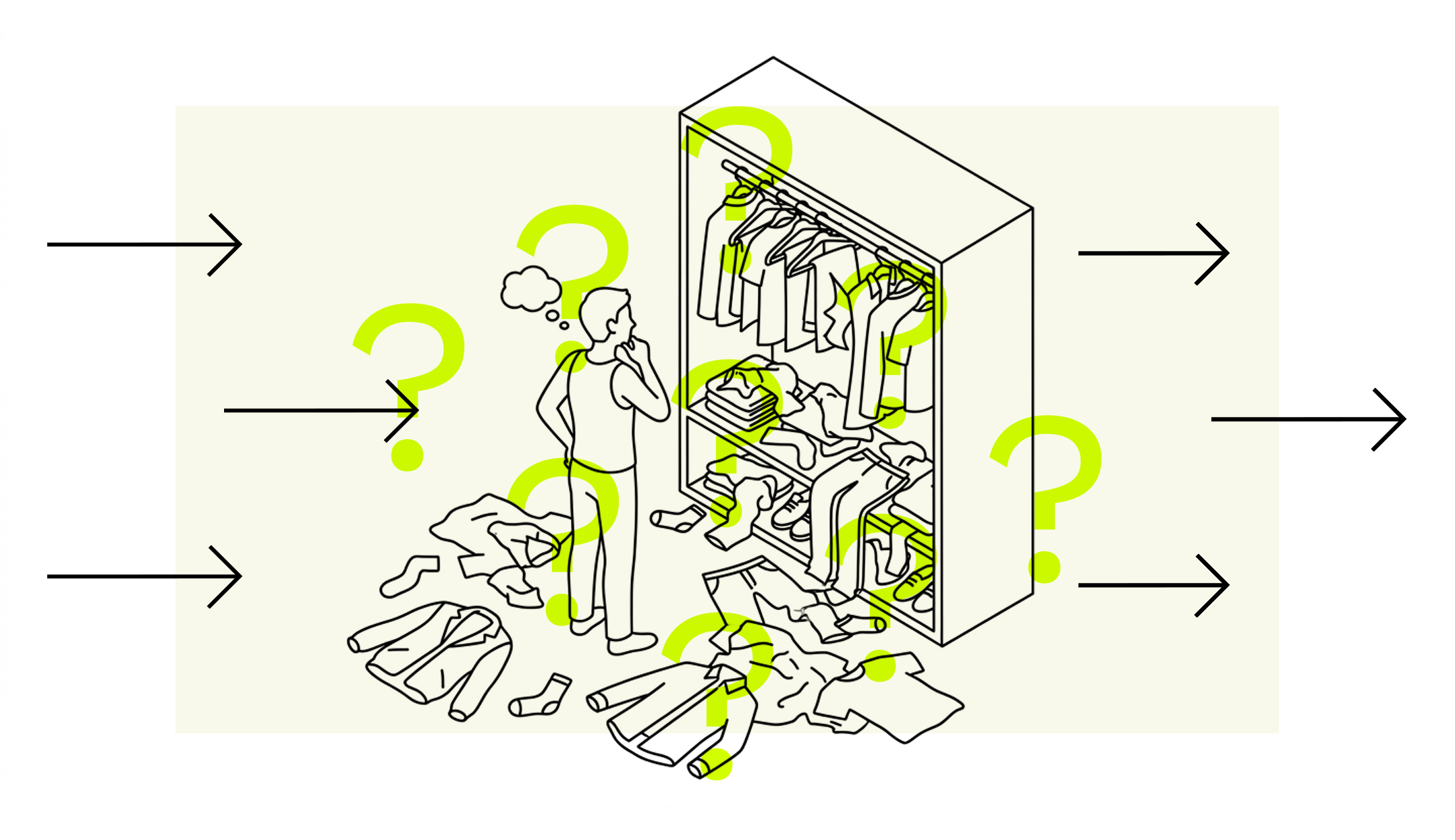
Interestingly, it is rarely said by people with very few clothes. More often, it comes from those whose wardrobes are already full. The problem is not the number of garments we own. The problem is that our wardrobes contain too many clothes we simply do not want to wear.
From the perspective of textile waste, perhaps this is where the problem really begins. If we buy a garment that we wear only a few times—or never at all—the waste has already been created. The only remaining question is when that garment will physically leave the wardrobe.
Today, we teach people how to sort textiles. We organise collection campaigns. We invest in recycling technologies. All of these are necessary, but they deal with the consequences of the problem rather than its cause.
Perhaps we should spend more time teaching people how to dress well.
La bella figura
In Italy, there is a concept known as la bella figura—the aspiration to present the best version of yourself and show respect for both yourself and others. It is not about expensive clothes or luxury brands. It is about looking well put together, making thoughtful choices, and wearing what genuinely suits you. This helps explain why so many people on Italian streets appear effortlessly well dressed. Dressing well is not simply a matter of fashion; it is part of the culture.
Taking care of your appearance is a way of showing respect for yourself and those around you. It turns even ordinary moments into something worth paying attention to. The more thought you give to how you dress, the fewer impulsive choices you make. You buy less often, but you wear what you buy much more.
Good style does not mean owning more clothes. It means owning fewer, but choosing them better.
Better Choices
People often speak about the “conscious consumer” as someone willing to pay more for quality. In reality, being conscious is less about spending more and more about making better choices.
When I know which cuts, colours, and fabrics suit me, I make fewer unsuccessful purchases. When I know how to care for and repair my clothes, they last longer. When my wardrobe works as a coherent whole rather than a collection of random purchases, I no longer feel the need to keep replacing it.
The benefits are immediate. I spend less money. I feel better in what I wear. My wardrobe works for me rather than against me. As a natural consequence, I consume less.
Not because someone told me to buy less, but because I simply have fewer reasons to make poor purchasing decisions.
A Well-Dressed Estonia
What if our goal was not simply to reduce textile waste, but to become a well-dressed nation?
A country where people know their personal style, understand garment quality, care for and repair their clothes, and build wardrobes in which almost every item gets worn. A country where a well-groomed appearance and timeless style are appreciated.
Just as naturally as we teach financial literacy or healthy eating in schools, we could also teach people how to choose, care for, and repair clothing. Municipalities could support repair services and clothing swap initiatives, schools could help shape young people’s sense of style, and the media could celebrate enduring style instead of fast fashion. If we want to reduce textile waste, we need to help people make better decisions before they make a purchase.
Because the most sustainable garment is not the one that gets recycled.
It is the one you are still happy to wear years later—because it truly suits you.